


Cloud PABX System: Modernize Your Business Phone (2026)

narity solutions • July 16, 2026
Digital representation of SIP Trunking and cloud communication cables.
By narity solutions July 16, 2026
Learn what a SIP Trunk is, how it benefits Malaysian businesses, and how to choose the right provider for your communication needs.

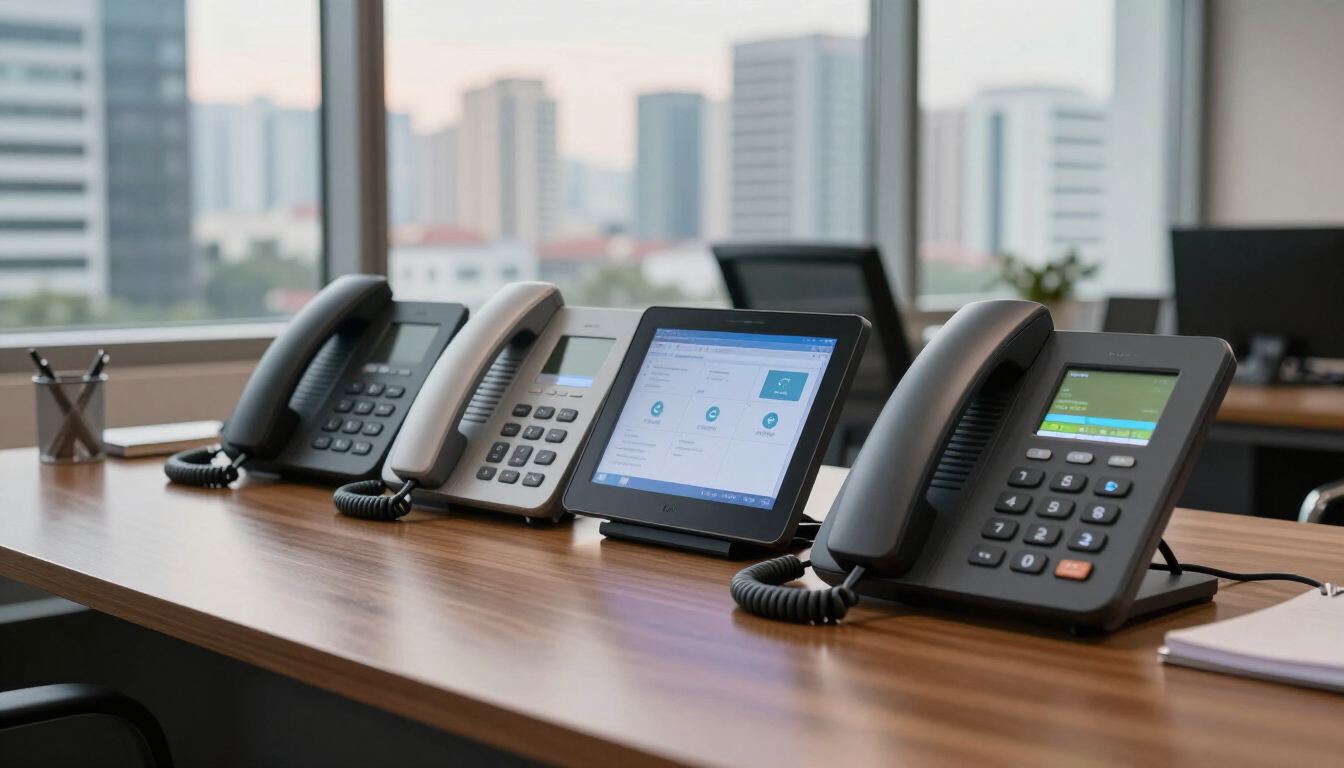
Modern IP Phone on a corporate desk showing office phone PABX system features
By narity solutions July 16, 2026
Explore the essential features of an office phone PABX system for Malaysian businesses. Learn how to modernize your communication with auto-attendants, SIP trunking, and cloud integration.

Modern PABX system hardware in a professional data center environment
By narity solutions July 16, 2026
Learn what a PABX system is, how it works, and the differences between Traditional, IP, and Cloud PBX to modernize your Malaysian business communication in 2026.
Comparison of IP PABX and analogue keyphone systems for business.
By narity solutions July 16, 2026
Discover the key differences between IP PABX and analogue keyphone systems. Learn about cost, scalability, and features to choose the best business phone system in Malaysia.
Modern server room representing SIP Trunking technology
By narity solutions July 16, 2026
Discover how PABX and SIP Trunk technology can transform your business communication. Learn about cost savings, scalability, and modern IP PBX solutions in Malaysia.

A Cloud PABX system is a business phone network hosted on the internet rather than physical on-site hardware. It manages calls using Voice over Internet Protocol (VoIP) to route communication through a secure cloud data center, offering modern features like mobile app integration, auto-attendants, and seamless remote collaboration.

What is a Cloud PABX System?

A Cloud PABX (Private Automatic Branch Exchange) represents the evolution of traditional business telephony. For decades, companies relied on bulky, expensive hardware stored in server rooms to manage internal and external calls. Today, the Cloud PABX system moves that entire infrastructure to the digital realm. By utilizing cloud PBX solutions in Malaysia , businesses can bypass the high costs of physical maintenance and cabling.

This technology works by converting voice signals into digital data packets. Instead of traveling over old copper wires, these packets move across the internet. This shift allows for a level of flexibility that legacy systems simply cannot match. Whether you are a small startup or a large enterprise, the cloud model scales with you. You no longer need to buy new cards or modules for your physical phone box; you simply update your subscription or add a user through a web-based dashboard.

In the Malaysian business context, this transition is particularly vital. As companies move toward digital transformation, having a communication backbone that supports hybrid work is essential. A Cloud PABX ensures that whether an employee is at the office in Kuala Lumpur or working remotely from Penang, they remain connected to the same office extension, maintaining a professional image at all times.

Modern Office Collaboration

How Does a Cloud PABX System Work?

Understanding the mechanics of a Cloud PABX system helps in appreciating its reliability. When a call is placed, the voice is captured by a VoIP-enabled device, such as an IP phone, a computer softphone, or a mobile app. This audio is immediately compressed into data packets and transmitted via your internet connection to the provider's cloud server.

The provider's server acts as the central brain. It identifies where the call needs to go—whether to another internal extension, a local Malaysian landline, or an international number. To connect to traditional phone networks, many systems utilize SIP trunking , which bridges the gap between internet-based calls and the Public Switched Telephone Network (PSTN).

Behind the scenes, the provider manages all the security, updates, and redundancy. If one data center faces an issue, calls are automatically rerouted through another, ensuring near-perfect uptime. This is a significant upgrade from IP PBX systems that are hosted on-site, where a simple power outage at the office could take the entire phone system offline. The cloud model ensures that as long as you have internet access, your business remains reachable.

Key Benefits of Moving to the Cloud

Switching to a Cloud PABX system offers transformative advantages for modern organizations. The most immediate impact is usually felt in the accounting department, but the operational benefits are equally profound. By removing the need for physical hardware, businesses can redirect their capital expenditure toward growth and innovation.

  • Significant Cost Savings : Eliminates the need for expensive hardware purchases and ongoing maintenance fees.
  • Unmatched Scalability : Easily add or remove extensions as your team grows without technical site visits.
  • Remote Work Support : Staff can answer office calls from any location using mobile apps or laptops.
  • Business Continuity : Built-in redundancy ensures calls are never missed during local power or internet failures.
  • Unified Communications : Integrates voice, video, and messaging into a single, cohesive platform.

The ability to work from anywhere is perhaps the most sought-after benefit in the current economy. Modern Cloud PABX systems allow employees to take their desk phone with them on their smartphones. This means no more missed sales opportunities or delayed client responses just because someone stepped away from their physical desk. Furthermore, international calling rates are typically much lower on VoIP systems compared to traditional telco providers, making global expansion more affordable for Malaysian SMEs.

Cloud Infrastructure Visualization

Essential Features of a Modern System

A Cloud PABX system is much more than just a way to make phone calls. It is a feature-rich productivity suite designed to enhance professional interactions. When evaluating providers, it is important to look for features that go beyond basic dial-tones to provide real value to your workflows.

Advanced call routing is a standard yet powerful feature. You can set up an Interactive Voice Response (IVR) menu—the familiar "Press 1 for Sales"—to ensure customers reach the right department instantly. Additionally, features like "Find Me/Follow Me" allow calls to ring multiple devices simultaneously, ensuring the user is reached wherever they are. Voicemail-to-email is another staple, converting audio messages into MP3 files and sending them directly to your inbox for quick review.

Collaboration tools are also deeply integrated into these systems. Many cloud platforms include built-in video conferencing, team chat, and file sharing. This creates a "Unified Communications as a Service" (UCaaS) environment. Instead of paying for three different subscriptions for phones, video meetings, and chat, a Cloud PABX can often consolidate these into one manageable monthly cost. This consolidation not only saves money but also simplifies the user experience for your employees.

Cloud PABX vs. Traditional On-Premise Systems

Comparing a Cloud PABX system to a traditional on-premise PBX highlights a clear technological shift. Traditional systems require a physical box (the PBX) installed in your office, which connects to the local phone company's lines. While these offered control in the past, they are increasingly seen as a liability in a fast-paced digital world.

Maintenance is the biggest differentiator. With an on-premise system, you are responsible for the hardware. If a card blows or the software needs an update, you often have to pay for a technician to visit your office. In contrast, a cloud system is managed by the provider. All updates happen automatically in the background, and there is no hardware in your office to break down. This "as-a-service" model moves the burden of technical management from your IT team to the specialists.

Flexibility also favors the cloud. If your business moves to a new office, a traditional PBX requires a complex relocation of lines and hardware. With a Cloud PABX, you simply unplug your IP phones, plug them into the internet at the new location, and you are back in business instantly. Your phone numbers remain the same because they are hosted in the cloud, not tied to a specific physical wire in a specific building.

Remote Worker Home Office

Is Your Business Ready for the Cloud?

Deciding to implement a Cloud PABX system involves evaluating your current infrastructure and future needs. The primary requirement is a stable, high-quality internet connection. Since voice traffic is sensitive to delays, having a dedicated fiber line or a well-managed network is crucial for maintaining crystal-clear call quality. Most modern Malaysian office buildings are well-equipped for this transition.

If you find that your team is increasingly mobile or that you are spending too much on maintaining legacy equipment, the answer is likely yes. The transition process is usually straightforward: your provider helps you port your existing numbers, configures your extensions in the cloud, and provides you with the necessary apps or IP phones. If you are unsure about the technical requirements, you can contact our experts to conduct a network assessment.

Summary of Cloud PABX Advantages

A Cloud PABX system is the most efficient way to modernize business communication in 2026. By moving your telephony to the cloud, you gain a scalable, cost-effective, and highly flexible platform that supports the way modern teams work. It eliminates the headaches of hardware maintenance while providing advanced features that improve customer service and internal collaboration.

  • Total Mobility : Work from the office, home, or on the road with the same professional number.
  • Cost Control : Switch from unpredictable repair costs to a transparent, monthly per-user fee.
  • Future-Proofing : Stay ahead with automatic updates and the latest communication features.

Whether you are looking to replace an aging system or setting up a new office, the cloud is the definitive standard for business phones. Evaluate your current usage, consider your growth plans, and take the step toward a more connected and efficient future.