

Use an Office Phone System for Small Office: 2026 Guide
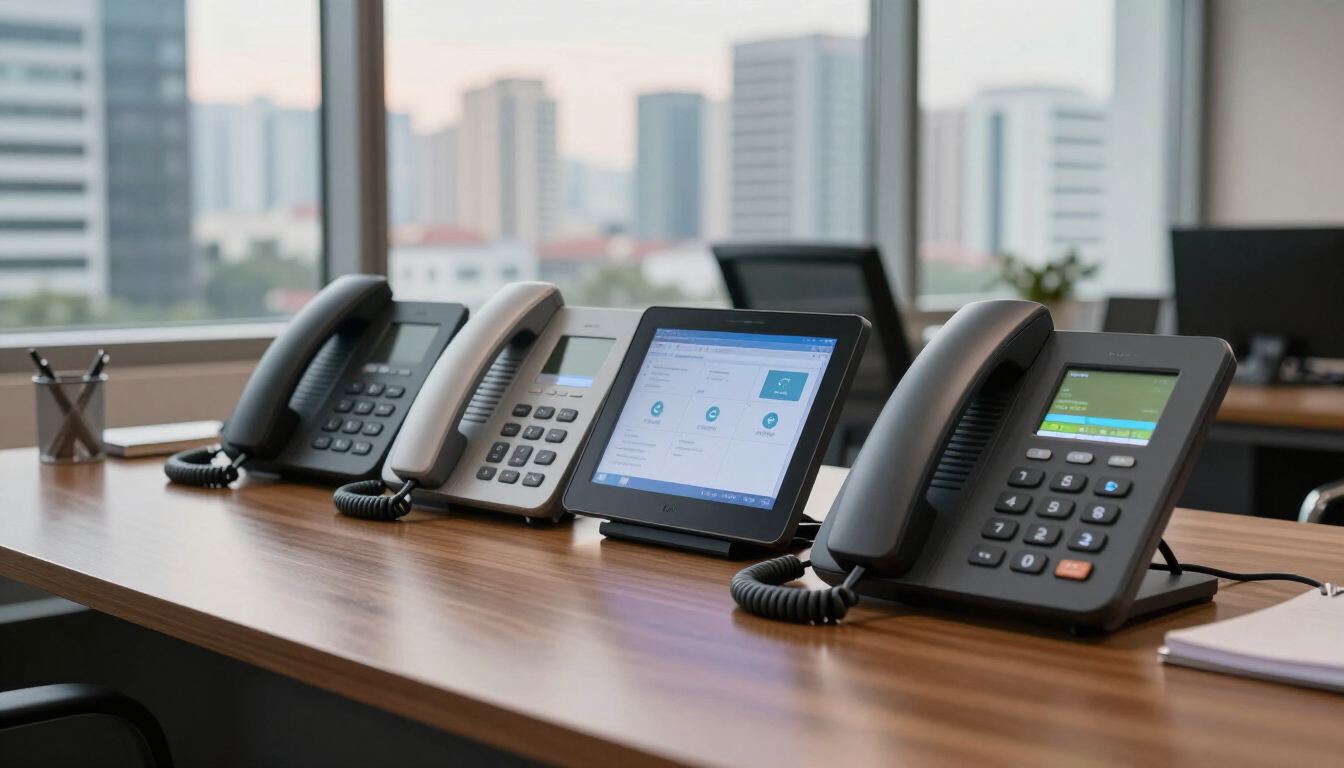
An office phone system for small office is a specialized communication network designed to manage multiple incoming and outgoing calls simultaneously through professional features like automated greetings, call routing, and internal extensions. Utilizing technologies like Cloud PBX or SIP Trunks, it streamlines business operations, improves professional image, and reduces costs.
What is an office phone system for a small office?
In the modern business landscape, an office phone system for small office functions as the central nervous system of professional communication. Unlike a standard consumer landline or a personal mobile device, these systems are engineered to handle the complexities of a business environment. They allow for multiple employees to share a limited number of external phone lines while providing each staff member with their own private extension.
Historically, small businesses were limited to bulky, expensive hardware known as Private Branch Exchanges (PBX) housed in a closet. However, by 2026, the definition has expanded to include software-driven solutions and hosted services. These modern systems facilitate not just voice calls, but also video conferencing, instant messaging, and integration with customer relationship management (CRM) software. The primary goal is to ensure that no customer call goes unanswered and that every interaction is handled with professional precision.
For a small business in Malaysia, choosing the right system often means balancing feature sets with budget constraints. Whether it is a traditional on-site setup or a versatile cloud-based solution, the core utility remains the same: creating a reliable, scalable, and professional interface for clients and partners to reach the business.
The Evolution of Business Communication Systems
The journey from basic analog phones to sophisticated Cloud PBX Malaysia solutions reflects the rapid digitization of the global economy. In the early days, a small office would have a few separate phone lines from the local provider. If three people were on the phone, the fourth caller would get a busy signal. This was detrimental to growth and customer satisfaction.
The introduction of the Key Phone System (KPS) and PABX allowed businesses to share lines and transfer calls internally. While effective, these systems required significant capital expenditure (CAPEX) and physical maintenance. As internet speeds increased and voice-over-IP (VoIP) protocols matured, the industry shifted toward IP-based systems. Today, an IP PBX Malaysia setup allows for seamless communication over the internet, providing higher quality audio and more features at a fraction of the traditional cost.
How does a phone system improve small office efficiency?
Efficiency is the lifeblood of a small enterprise. An office phone system for small office directly contributes to this by automating routine tasks that would otherwise consume staff time. Instead of a receptionist manually directing every single call, an Auto-Attendant (Interactive Voice Response) can greet callers and offer a menu of options. This ensures that the caller reaches the right department—be it sales, support, or accounts—on the first attempt.
Furthermore, modern systems offer features that keep employees connected regardless of their physical location. With the rise of hybrid work in 2026, the ability to have an office extension ring on a mobile app or a laptop is invaluable. This mobility ensures that business continues as usual, even if the team is working remotely or traveling for client meetings.
Common efficiency-boosting features include:
- Auto-Attendant: Professional greetings that route callers without human intervention.
- Call Queuing: Managing high call volumes during peak hours without dropping leads.
- Voicemail-to-Email: Receiving audio files in your inbox for quick playback and archiving.
- Internal Extension Dialing: Connecting team members instantly with three or four-digit codes.
- Conference Bridging: Hosting professional multi-party calls without third-party apps.
Key Features Every Small Office Should Prioritize
When evaluating a communication system, it is easy to get overwhelmed by technical specifications. However, for a small office, certain features provide a much higher return on investment than others. Reliability is paramount; a system that drops calls is worse than having no system at all. Beyond uptime, focus on scalability. Your phone system should grow with your business. Adding a new employee should be as simple as clicking a button in a dashboard rather than calling a technician to pull new wires.
Security is another critical pillar. In an era of increasing cyber threats, ensuring that your SIP Trunk Malaysia provider offers encrypted signaling and robust fraud detection is non-negotiable. Small businesses are often targets for toll fraud, where hackers hijack phone lines to make expensive international calls. A professional system provides the necessary firewalls and monitoring to prevent these occurrences.
Lastly, integration capabilities are what separate a good system from a great one. If your phone system can "talk" to your CRM, your employees will see a pop-up with the customer's name and previous order history before they even pick up the handset. This level of service was once reserved for large corporations but is now standard for small offices using modern Products .
Why choose Cloud PBX over traditional PABX?
The debate between on-premise hardware and cloud-hosted services has largely been settled in favor of the cloud for small businesses. A Cloud PBX removes the need for expensive server racks and specialized cooling in your office. The service provider handles all the updates, security patches, and hardware maintenance in a secure data center.
For a small office, the financial model of Cloud PBX is highly attractive. Instead of a large upfront payment for hardware, you pay a predictable monthly subscription per user. This transforms a capital expense into an operating expense, freeing up cash flow for other business needs. Additionally, cloud systems are inherently disaster-proof. If your physical office loses power or internet, the cloud system remains active, routing calls to mobile devices or other locations automatically.
Advantages of Cloud-Based Solutions:
- Minimal Upfront Cost: No need to purchase expensive central server units.
- Automatic Updates: Always run the latest software versions without manual intervention.
- Rapid Deployment: Set up a new office communication network in hours, not weeks.
- Universal Access: Connect from anywhere in the world with a stable internet connection.
- User-Friendly Portals: Manage extensions and recordings via a simple web browser.
What role does a SIP Trunk play in your office?
A SIP (Session Initiation Protocol) Trunk is the digital equivalent of a traditional copper phone line. It is what connects your internal office phone system for small office to the Public Switched Telephone Network (PSTN). By using a SIP Trunk Malaysia , you can eliminate the need for costly physical lines like PRI or BRI circuits.
SIP Trunks allow for "virtual local numbers," meaning you can have a Kuala Lumpur landline number even if your team is working from Penang. This helps establish a local presence in multiple markets without the overhead of multiple physical offices. Moreover, SIP Trunks are highly flexible; you can increase or decrease the number of concurrent call paths you need based on seasonal demand, ensuring you never pay for capacity you aren't using.
Maximizing ROI on Your Communication Infrastructure
To get the most out of your investment, it is important to train your staff on the advanced features of the system. Many small businesses pay for a high-end office phone system for small office but only use it for basic calling. By utilizing call analytics, business owners can see when their busiest times are and staff accordingly. Listening to call recordings can help in training new sales staff and resolving customer disputes more effectively.
Furthermore, consider the cost savings of eliminating long-distance charges. Most IP-based systems offer significantly lower rates for international calls compared to traditional telcos. If your small office deals with international clients, this feature alone can pay for the entire system within a few months.
How to select the best provider in Malaysia?
Choosing a provider is as important as choosing the technology itself. In Malaysia, you need a partner who understands the local regulatory environment and the specific challenges of the regional internet infrastructure. Look for a provider that offers local support with a proven track record of uptime. Ask about their redundancy plans—what happens if their main data center goes offline? A reputable provider will have multiple points of presence to ensure continuous service.
It is also wise to check for hidden costs. Some providers offer a low base price but charge extra for essential features like call recording or mobile apps. Ensure you get a comprehensive quote that covers all the needs of your small office. Requesting a demo or a trial period is a great way to test the call quality and the ease of use of the management interface before making a long-term commitment. Feel free to Contact Us to discuss your specific requirements and get a tailored recommendation for your business.
Future-Proofing Your Office Communication
As we look toward the later half of the decade, artificial intelligence will play a larger role in small office telephony. We are already seeing AI-driven transcription and sentiment analysis becoming available for small business tiers. An office phone system for small office that is based on open standards (like SIP) will be much easier to upgrade with these new technologies than a closed, proprietary hardware system.
Investing in a modern communication platform today ensures that your business remains competitive, responsive, and professional. Whether you are a startup of two or a growing team of twenty, the right phone system is a foundational tool that supports every other aspect of your business growth.
Key Takeaways for Small Businesses:
- Professionalism: An office phone system gives your small business the appearance of a much larger, established corporation.
- Cost Efficiency: Cloud-based systems and SIP Trunks significantly reduce monthly communication overhead compared to traditional landlines.
- Flexibility: Modern systems support hybrid and remote work, allowing your team to stay connected from any location.
- Scalability: Easily add or remove users and features as your business evolves without needing new hardware.
- Next Steps: Evaluate your current call volume, identify necessary features like auto-attendants, and compare Cloud PBX vs IPPBX options to find the best fit for your budget.