

How to Choose the Best Office Phone System (2026 Guide)
To choose the right office phone system, evaluate your business size, remote work needs, and budget. Determine if you require a flexible Cloud PBX, a hardware-based IP PBX, or a SIP Trunk for existing infrastructure. Prioritize scalability, integration capabilities, and a reliable Malaysia-based provider to ensure seamless communication.
Selecting a communication infrastructure is one of the most critical decisions for any modern enterprise. In an era where connectivity defines productivity, the "how to choose office phone system" question becomes less about just buying hardware and more about architecting a workflow. Whether you are a startup in Kuala Lumpur or an established firm in Penang, your choice will dictate how effectively your team collaborates and how professionally you present your brand to clients.
What is the best phone system for a modern office?
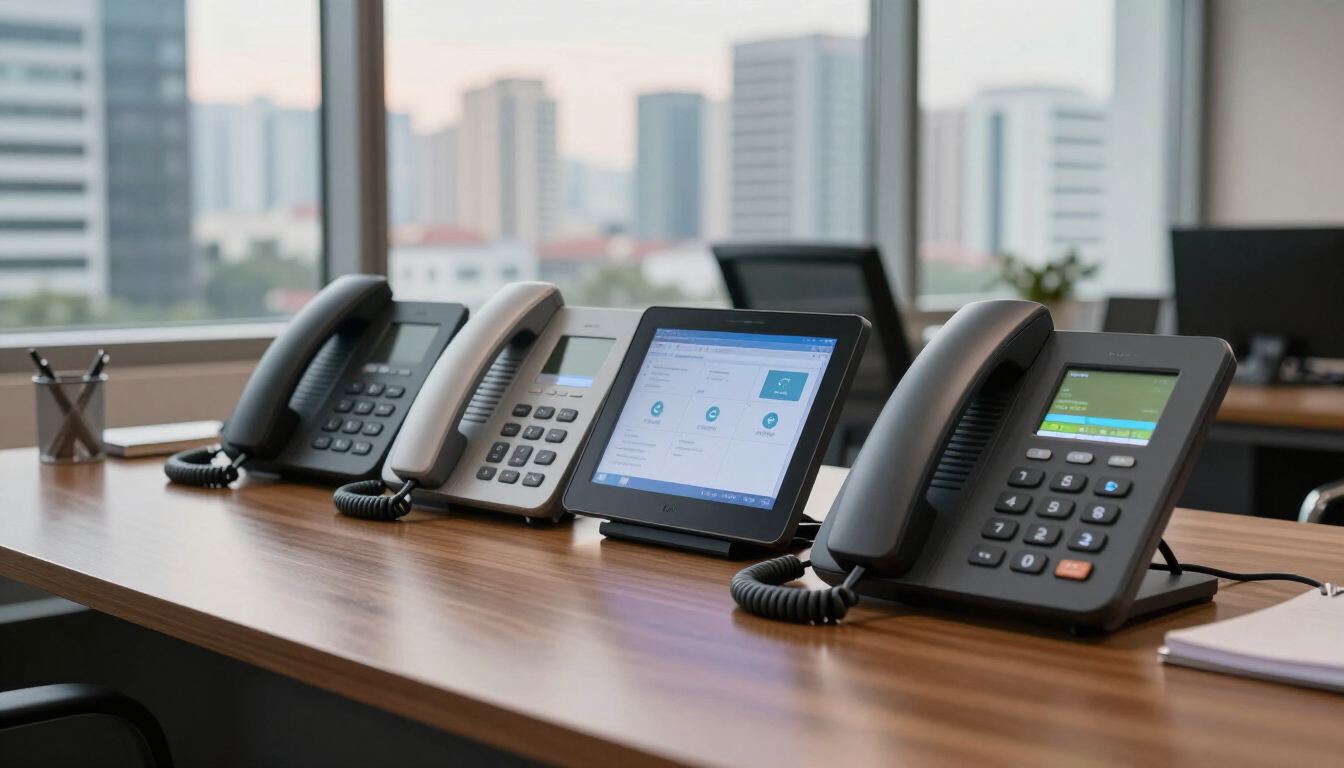
The "best" system is no longer a one-size-fits-all solution. For many, a Cloud PBX Malaysia system is the gold standard because it eliminates the need for heavy on-site hardware while offering unparalleled flexibility. However, for organizations with strict data residency requirements or existing high-speed internal networks, an on-premise IP PBX Malaysia might be the superior choice. The best system is ultimately the one that aligns with your operational dynamics.
When evaluating options, you must consider three primary architectures:
- Hosted/Cloud Solutions : Managed entirely by the provider via the internet.
- On-Premise Systems : Hardware located physically in your office.
- Hybrid Models : A combination of local control and cloud-based features.
Modern offices are increasingly moving toward unified communications (UC). This means your phone system doesn't just handle voice calls; it integrates video conferencing, instant messaging, and email. This holistic approach ensures that no matter where your employees are located, they remain part of a cohesive communication loop. The shift toward hybrid work environments has made mobility features—like mobile apps that mirror desk phone functionality—a non-negotiable requirement for most growing businesses.
Essential features of modern office phone systems
Identifying the right features is the next step in understanding how to choose office phone system configurations that drive value. You shouldn't just pay for a list of features; you should invest in tools that solve specific business problems. If your team spends most of their time in the field, mobile integration and find-me/follow-me services are essential. If you run a customer support center, call queuing and detailed analytics become your highest priorities.
Consider these five essential feature categories:
- Auto-Attendant/IVR : An automated receptionist that directs callers to the right department.
- Call Recording and Monitoring : Critical for training, quality assurance, and legal compliance.
- Mobile and Desktop Apps : Allows staff to use their business extension on any device.
- CRM Integration : Links your phone system with tools like Salesforce or HubSpot for better data tracking.
- Scalability : The ability to add or remove extensions instantly as your business fluctuates.
By focusing on these core capabilities, you ensure that your investment supports your current operations while leaving room for future growth. A professional PABX Office Key Phone System today must be more than a dial pad; it must be a gateway to efficient business processes. Without these features, your business risks appearing outdated and may struggle with internal bottlenecks that slow down customer response times.
How to choose between Cloud PBX and IP PBX?
The choice between Cloud PBX and IP PBX often boils down to a debate between Capital Expenditure (CAPEX) and Operating Expenditure (OPEX). A Cloud PBX Malaysia setup typically involves lower upfront costs because there is no server to buy or install. You pay a monthly subscription per user, which includes maintenance and updates. This makes it highly attractive for small to medium enterprises that want to preserve cash flow while accessing enterprise-grade features.
Conversely, an IP PBX Malaysia system requires a significant initial investment in hardware and licenses. However, over a five to ten-year period, the total cost of ownership may be lower because you are not paying ongoing subscription fees for the core system. This path is often chosen by larger corporations that have dedicated IT staff to maintain the equipment and want total control over their security protocols and internal network traffic.
Key considerations for this comparison include:
- Internet Dependency : Cloud systems require a stable, high-speed connection to function.
- Maintenance : Cloud providers handle all updates; IP PBX requires manual oversight.
- Customization : On-premise systems often allow for deeper, niche technical customizations.
- Redundancy : Cloud systems usually have built-in failover across multiple data centers.
What are the benefits of using a SIP Trunk provider?
If your business already has a functioning IP-enabled PBX but wants to move away from traditional PSTN or ISDN lines, you need a SIP Trunk Malaysia provider. SIP (Session Initiation Protocol) Trunking allows you to send voice and video over your data connection rather than through old-fashioned copper wires. This transition is one of the most effective ways to reduce monthly telecommunication costs while increasing call capacity.
The primary benefits of SIP Trunking include:
- Cost Savings : Eliminate expensive physical line rentals and reduce long-distance charges.
- Flexibility : Easily add more "trunks" or channels during peak seasons without physical installation.
- Number Portability : Keep your existing business numbers even if you move offices.
- Disaster Recovery : Reroute calls to other locations or mobile devices if your main office loses power.
By integrating a SIP Trunk, you bridge the gap between traditional reliability and modern efficiency. It allows you to leverage the internet for transport while maintaining the robust control of your internal PBX hardware. For many Malaysian businesses, this is the first step in a phased migration toward a fully cloud-based environment, providing the benefits of VoIP without a complete overhaul of existing desk phone hardware.
Evaluating your business communication requirements
Before signing any contract, you must perform a thorough audit of your current and projected needs. How to choose office phone system providers depends heavily on your specific user profiles. Does your sales team need to make hundreds of outbound calls daily? Does your executive team require high-definition video conferencing? Answering these questions early prevents you from overpaying for unnecessary features or under-equipping your staff.
Start by mapping out your user groups:
- Power Users : High call volume, need advanced reporting and integration.
- Standard Users : Regular office workers who need basic call handling and voicemail.
- Remote/Mobile Users : Staff who work from home or travel and need app access.
- Common Area Phones : Basic devices for lobbies, breakrooms, or warehouses.
Additionally, assess your physical infrastructure. Does your office have the necessary Cat6 cabling to support IP phones, or would a Wi-Fi-based system be more practical? Is your router capable of prioritizing voice traffic (Quality of Service - QoS) to prevent dropped calls or jitter? Conducting a network readiness test is a vital step that many businesses overlook, only to face call quality issues later. We recommend speaking with our experts at About Us to help assess your technical requirements.
Why should you consider a local Malaysia provider?
Working with a local provider like a Malaysia Office Communication systems specialist offers distinct advantages that international giants cannot match. The first is latency. When your voice traffic has to travel to a server in another continent and back, you experience delays and echo. A local Cloud PBX Malaysia provider hosts their servers within the country, ensuring crystal-clear audio quality and faster connection times.
Secondly, local support is invaluable. When a technical issue arises, having a support team that operates in your time zone and understands the local telecommunications landscape—including the nuances of providers like TM or Maxis—makes troubleshooting significantly faster. A local partner can also assist with physical installations, onsite training, and hardware replacements that global SaaS companies simply cannot offer.
Benefits of a local partner include:
- Compliance : Ensuring your data handling meets Malaysian regulatory standards.
- Billing : Simple invoicing in MYR without currency fluctuation risks.
- Onsite Support : Availability of technicians for physical troubleshooting.
- Local SIP Integration : Easier connection to local telecommunication gateways.
Future-proofing your office communication
Technology moves fast, and your phone system should not become a legacy anchor within two years. To future-proof your setup, look for platforms that offer an Open API. This allows your phone system to talk to other software you might adopt in the future, such as new CRM platforms, project management tools, or AI-driven analytics engines. A system that is "closed" will eventually force you into a costly replacement when your business processes evolve.
Furthermore, consider the transition to AI. In 2026, AI is no longer a luxury; it is becoming a standard part of communication. Features like real-time transcription, AI-driven sentiment analysis of customer calls, and intelligent call routing based on caller history are now accessible. Choosing a provider that actively invests in these emerging technologies ensures that your business stays competitive and provides a superior customer experience.
Key Takeaways for Choosing Your System
- Prioritize Mobility : Ensure your system supports remote work through robust mobile and desktop applications.
- Balance Cost and Control : Choose Cloud PBX for low upfront costs or IP PBX for long-term ownership and control.
- Verify Quality : Use a local Malaysia provider to minimize latency and ensure reliable, responsive technical support.
- Test Your Network : Confirm your internet bandwidth and hardware can handle the increased demand of VoIP traffic.
- Plan for Growth : Select a scalable solution that allows you to add users and features as your business expands.
For personalized advice on building the perfect communication stack for your organization, Contact Us today. Our team specializes in tailoring PABX Office Key Phone System solutions to the unique needs of the Malaysian business landscape, ensuring you stay connected to what matters most.